Hormones

Light, circadian rhythm, menstrual cycle & fertility: how light shapes our hormones and reproductive health

Light, circadian rhythm, menstrual cycle & fertility: how light shapes our hormones and reproductive health

Twice a year, many of us adjust our clocks — an hour forward in spring, an hour back in autumn when clocks line up with the sun again — a practice that dates back to the early 20th century in the UK. The idea was simple: make better use of daylight, boost productivity, and align human activity with industrial needs. Adjusting our clocks might be a gesture toward efficiency — but not necessarily toward balance.

While our clocks may shift in an instant, our biology does not. Our bodies remain tuned to a rhythm far older than the mechanical clock — the rhythm of light and darkness, sunrise and sunset, rest and activity.

In Traditional Chinese Medicine (TCM), this principle is foundational. Health is understood as living in harmony with the Qi of nature — the vital energy that flows with the seasons, the elements, and the movement of the sun. The ancients taught that we should rise with the light, rest with the dark, eat and act in alignment with the natural cycles and seasons. To fight against nature’s timing was to invite imbalance.

Centuries later, modern science is rediscovering this truth. Through the lens of chronobiology or the study of biologic rhythms, we now understand that every cell in the human body operates according to an internal 24-hour rhythm known as the circadian rhythm. This rhythm regulates our hormones, metabolism, immune system — and yes, even our fertility.

And the key regulator of this rhythm is light.

Today, surrounded by artificial light and glowing screens, we’ve unintentionally dimmed the natural cues that keep our hormonal system in tune. Understanding how light interacts with our biology — and learning to live once again in rhythm with it — may be one of the simplest and most profound ways to support fertility and hormonal health…
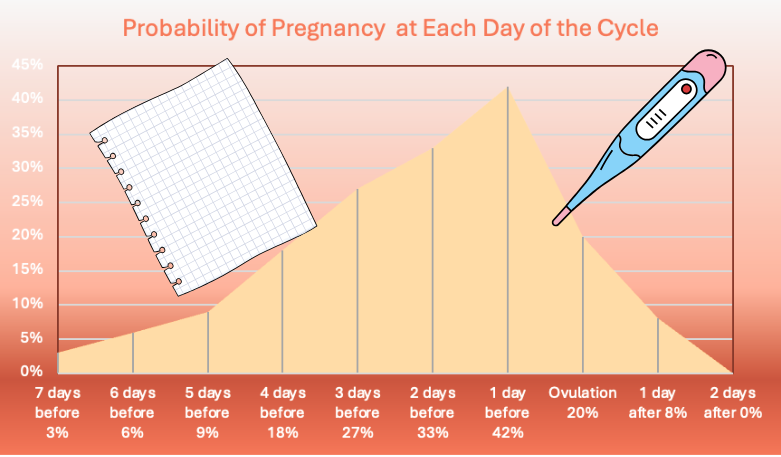

BBT and cervical mucus tracking: why I tell all my patients to use the sympto-thermal method whether they are trying to conceive or not

BBT and cervical mucus tracking: why I tell all my patients to use the sympto-thermal method whether they are trying to conceive or not

What is the sympto-thermal method?

Ever wished your body came with a manual?


Good news—it kind of does! The sympto-thermal method is like decoding your body’s natural signals to understand your fertility, your cycle, and even your overall health. Whether you're curious about your hormonal health, trying to conceive, avoid pregnancy or just want to ditch the hormones, the sympto-thermal method might be your new best friend. Let’s dive into what it is, how it works, and why so many people are loving this body-literacy approach.

The sympto-thermal method is a fertility awareness method that combines the following key core observations:

  • Basal body temperature (BBT) – your body’s resting temperature, taken first thing in the morning. A slight rise after ovulation due to progesterone

  • Cervical mucus – the fluid your body produces throughout your cycle, which changes in texture and appearance depending on your fertility status.

  • Optional observation: Check your cervix position and feel, if you're comfortable. High, soft and open during fertile days.

By tracking them daily, you can confidently identify

Hormonal imbalance: all the signs your body is sending you

Hormonal imbalance: all the signs your body is sending you

Hormonal imbalances: how to recognise the signs?

Our bodies communicate constantly, and when we learn to listen, it becomes possible to spot signals that we were told were normal or that we simply choose to ignore. Hormones, these chemical messengers, orchestrate our energy, sleep, mood, fertility, digestion, libido, and weight. If one of these messengers goes awry, the effects ripple throughout, like an orchestra with one instrument playing out of tune. The goal here isn't to make a diagnosis, but to understand the clues our body is sending us and identify when it's helpful to consult a health professional.